What relevelling is
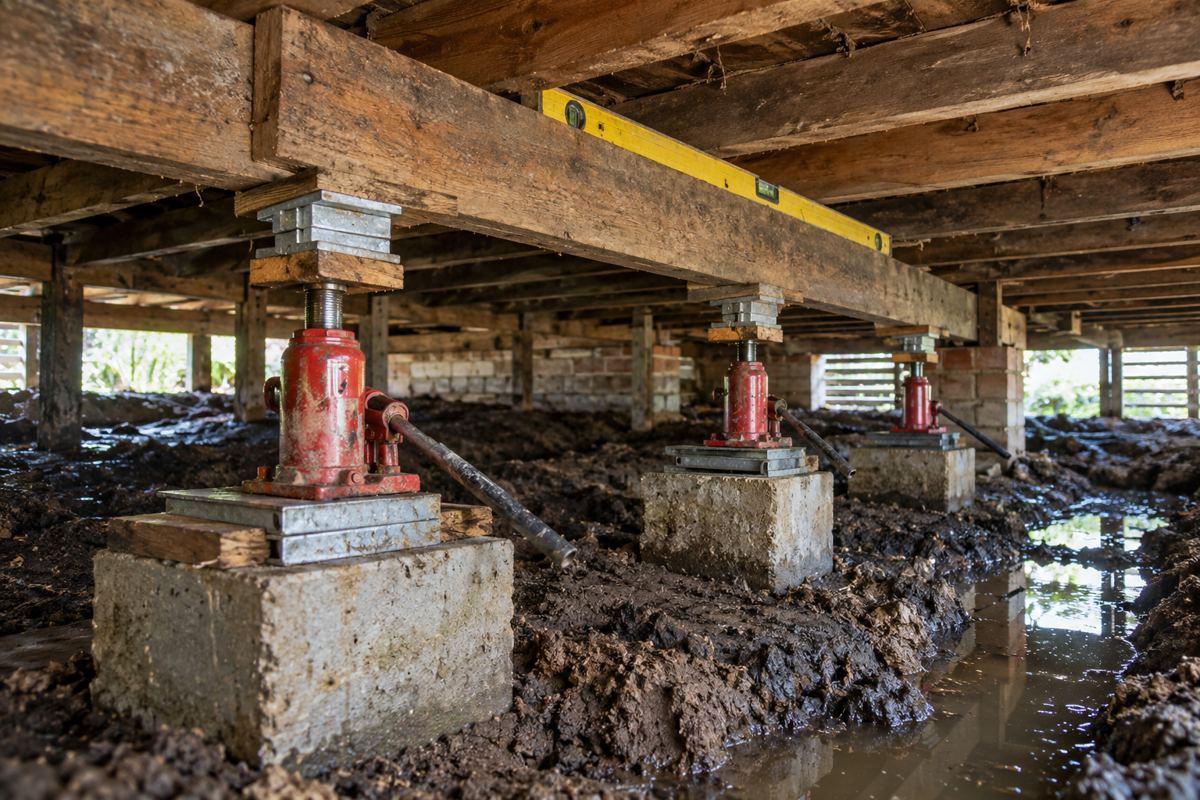
Relevelling lifts a house that has sagged and holds it level without replacing the stumps. Jacks go under the bearers, the low points come up a few millimetres at a time to a laser line, and the gap between the top of the stump and the bearer is filled with galvanised steel packers, or on adjustable steel stumps the head is wound up. The trade calls it jack and pack. It suits a house whose stumps have sunk into the ground, or were packed badly last time, but are themselves sound. It does not suit a house whose stumps have rotted, because a rotten stump cannot be packed; it has to be replaced.
The inspection decides which it is. A stump that is plumb, solid under a probe and dry at the ground line can be relevelled on. One that is soft, hollow, leaning or standing in water is a replacement. Under most older Peninsula houses the answer is some of each, and the quote lists which stumps are which.
Settled, not rotten: why it happens here
On the clay side of the Peninsula a stump settles because the ground under it softens. The Hastings unit across Hastings, Tyabb and Somerville is a near-level alluvial plain with poor drainage and surface water in wet periods, with medium to heavy clay from 300 to 400 mm. The Bittern unit under Mount Eliza, Baxter and the Western Port side has sodic subsoils that waterlog. A concrete stump set shallow on either of those in a dry year will sink a little in each wet June, and over twenty winters the floor above it goes with it. The timber is fine, the stump is fine, it is just lower than it was.
On the sand side it is different. The Cups unit dunes from Rye to Portsea and the Rosebud unit under Rosebud and Capel Sound carry a stump well until the sand around it is disturbed: a trench for a new water service, a pool next door, a hole that cut the cemented pan at about 900 mm, or simply decades of the base boards letting water wash the sand out from one side. The stump tilts rather than sinks, and a tilted stump can sometimes be plumbed and packed, sometimes not.
On the granite slopes of the Arthurs Seat unit at Mount Martha and Arthurs Seat, stumps on the downhill side of a cut-and-fill platform settle into the fill while the uphill ones sit on rock. The pattern is a whole side down, which tells the story before anyone crawls under.
What the owner notices is the same whichever ground it is: a floor that slopes toward one wall, doors that stick or swing open on their own, a gap opening between the skirting and the floor, a diagonal crack over a door or a window. An industry guide lists sinking or spongy floors, cracked walls, sticking doors and water or termite damage as the usual signs, and the signs guide goes through how to read them. None of them say whether the stumps are settled or rotten; only the inspection does.
| What the inspection finds | What it means |
|---|---|
| Stumps sound, bearers sound, floor out of level by 20 to 40 mm | Relevel. Jack and pack, a day or two, no digging, no new footings. |
| Stumps sound, a few bearers soft at the ends | Relevel plus bearer repair. The floor comes up where a bearer is replaced. |
| A few stumps rotted or leaning, most sound | Partial restump of the failed ones, relevel the rest, one building permit. |
| Most stumps rotted or standing in water | Full restump. Relevelling on rotten stumps buys a winter, no more. |
| Concrete stumps sunk unevenly in Hastings or Bittern clay | Relevel, then fix the drainage. If the ground keeps moving, adjustable steel on the worst corner. |
| Stumps tilted in dune sand, packing washed out | Plumb and pack where the stump can be, replace where it cannot, and stop the sand moving. |
How the work runs
- Levels. A laser or water level is run through the house and under it. The high point is found, the low points measured against it, and the pattern read: one corner down is one stump, a whole side down is drainage or fill, a dip in the middle of a room is a bearer.
- Old packing found. Many Peninsula holiday houses have been relevelled two or three times since the 1950s with whatever was on hand, bricks, timber offcuts, roof tiles. The crew finds it before the jacks go in, because a loose stack of brick under a bearer is not something to lift against.
- Jacking. Hydraulic bottle jacks on hardwood pads go under the bearers near the low stumps. The house comes up in small lifts, checked against the laser each time, so plaster, cornices and any brickwork are not shocked.
- Packing. The gap is filled with galvanised steel packers bedded flat. Timber wedges are not used; they crush and the floor drops again. On adjustable steel stumps the head is wound up instead.
- Doors and cracks. As the floor comes level, doors planed to fit a sagging frame can bind and cracks can shift. Some close. The ones that do not are patched afterwards.
- Drainage. If the stumps sank because the ground stays wet, the ground is regraded and vents are added, otherwise the relevel is temporary. The drainage page covers that work.
Does relevelling need a permit?
If no stump or footing is replaced and no structural element is altered, relevelling may fall within the repair and maintenance exemption in the Commission's practice note BP-01, provided it does not adversely affect the structural soundness of the building. The moment a stump comes out or a bearer is cut, the exemption ends and a building permit from a private registered building surveyor is needed. The surveyor makes that call, not the builder, and a registered builder should do the work either way: the Commission requires registration for restumping and reblocking regardless of value, and relevelling is done by the same trade with the same jacks. If the surveyor decides a permit is needed, the Shire's lodgement fee was $138.35 in 2025-26 and a property information certificate $53.62.
Heritage is the other question. A relevel that puts the floor back where it was built does not change the external appearance, but on a limestone villa or timber cottage in the Sorrento or Back Beach Road Portsea precincts, where the floor comes up more than the original line or the base cladding has to be altered, ask the Shire's heritage team before starting. Never assume a relevel is exempt from the Heritage Overlay; ask at [email protected], where pre-application advice is free.
The holiday house relevel
A relevel is the job an absent owner most often books after a neighbour's call or a tenant's complaint about doors, and it is the job most often done without the owner present. The practical rule is that the inspection comes first and the photographs come with it. If the report shows sound stumps and 20 to 40 mm of drop, a relevel can be booked, done and photographed in a couple of days between visits. If the report shows soft stumps, the owner needs to know before a crew is on site, because the job has changed from a day of packing to a permit and a restump. The Shire's figures put unoccupied dwellings at 34.9 per cent in Dromana and Safety Beach and 29.3 per cent in Rosebud and Capel Sound, and those are the streets where this conversation happens most.
Timing matters on clay. A house at Hastings or Bittern relevelled in October, when the ground is at its wettest and lowest, will sit high by March. Where there is a choice, the levels are taken late in summer when the Cerberus record says the ground is driest, and the relevel is done then. On sand the season matters less.
What a relevel quote should say
A relevel is a small job and the quote is often a line or two, which is where trouble starts. It should name the stumps that will be packed by position, the amount of lift expected at each, the packer material, and which stumps the inspection found to be soft, tilted or wet and are therefore not being relevelled on. It should say whether the surveyor has been asked about a permit and what the answer was. It should say what happens to the bearers found soft while the jacks are under them, and how that is priced. And it should say whether the ground under the house is being regraded and vents added, because on the Western Port side a relevel without drainage is a relevel booked again in three winters. If the quote says relevel the house and nothing else, ask for the rest in writing before the crew arrives.
What relevelling cannot fix
Relevelling cannot make a rotten stump sound; it can only sit a bearer on it for a while. It cannot stop clay moving, so on the Hastings and Bittern units it needs drainage or adjustable stumps behind it to last. It cannot put sand back under a stump that has tilted because the ground washed out; that stump is replaced and the base boards sealed. It cannot square a door frame that was racked when the house dropped; a carpenter does that after the floor is level. And it cannot fix a brick veneer on a strip footing, which is underpinning and an engineer.
Check the current rules before you rely on this
This page describes house relevelling on existing stumps on the Mornington Peninsula and when it crosses into permitted building work. It describes the rules in general terms as they stood in October 2026. Standards, forms, thresholds and fines change.
The authoritative sources are Building and Plumbing Commission practice note BP-01, when is a building permit required, Building and Plumbing Commission (as the VBA) on registration being required for restumping and reblocking at any value, Building and Plumbing Commission find and check a practitioner and Mornington Peninsula Shire, Heritage Overlay and planning permits. Where anything here differs from those sources, they are right and we are not.
We are not building surveyors, engineers, planners or lawyers. For what applies to your house, ask a registered building surveyor or ring Mornington Peninsula Shire on 1300 850 600.
Accurate at the time of writing, October 2026. Always check the source before relying on it.